

Published: · Updated:
Air Line Antifreeze and Frozen Air Brakes: Fix and Prevent
Frozen air brakes come from moisture in the system. Learn what dryer makers advise on air line antifreeze, how to thaw safely and how to prevent it.
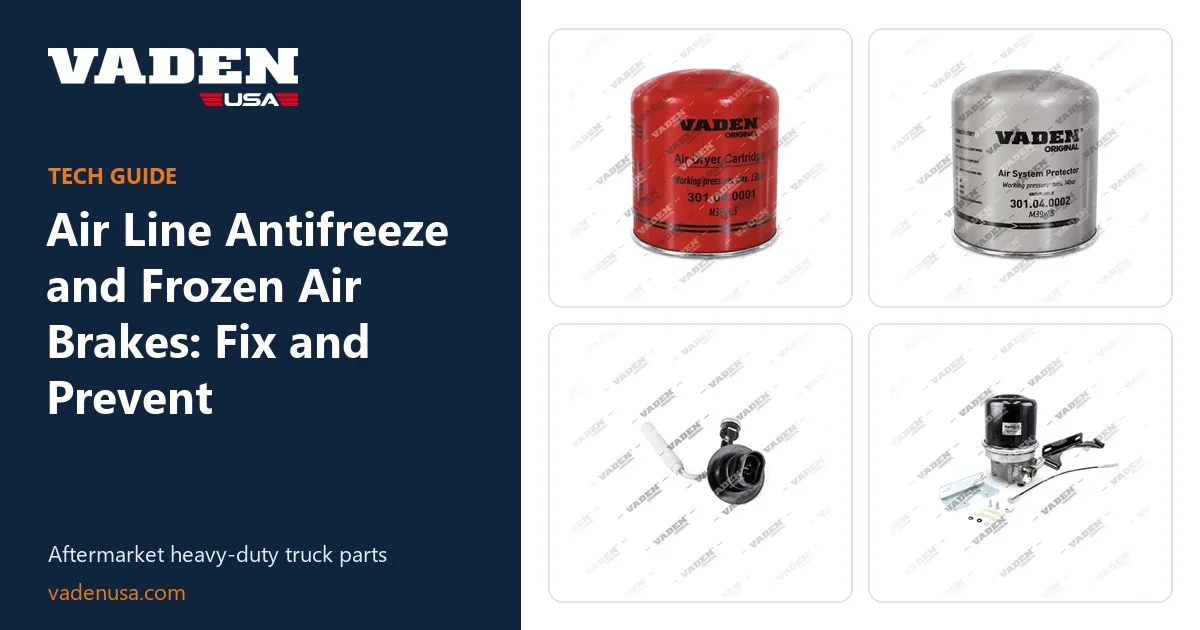
Air line antifreeze, an alcohol-based liquid, is not the recommended fix for frozen air brakes. Many air dryer makers advise against adding alcohol to a system with an air dryer, and alcohol is not a substitute for adequate air drying capacity. The reliable cure is dry air: a working air dryer, a fresh cartridge, a dryer heater and daily tank draining.
Why air brakes freeze
Air leaving the compressor is hot and carries water vapor and a little oil. As it cools in the lines and tanks, the vapor turns into liquid. If that water reaches a valve, a drain port or a small-diameter line in freezing weather, it turns to ice and blocks the flow of air. The brakes do not fail because the air is cold. They fail because liquid water got into places it should never reach.
The air dryer is there to stop this. It removes most of the moisture before the air enters the tanks. When the dryer is worn out or the heater does not work, water passes through and the winter problems start. For a full explanation of the dryer itself, see our guide to the semi truck air dryer.
Symptoms of frozen air brakes
| Symptom | Likely cause | First check |
|---|---|---|
| Brakes will not release in the morning | Ice in a valve or line, or shoes frozen to the drum | Gauge pressure, then listen for air at the parking brake valve |
| Air pressure builds slowly or not at all | Frozen purge or unloader, or a blocked supply line | Dryer purge valve and dryer heater |
| Parking brake knob will not stay in | Ice in the control valve, or low pressure | System pressure and the valve body |
| Brakes drag after a cold start | Ice in a relay or quick release valve | Valve exhaust ports and wheel-end heat |
| Water or slush comes out of the drain cocks | Dryer is not removing moisture | Cartridge age and heater |
What manufacturers say about air line antifreeze
Some trucks have (or had) an alcohol evaporator or injector. Some state CDL manuals still describe one, such as the Oregon CDL manual, which says some systems have an alcohol evaporator that puts alcohol into the air system, and tells drivers to check the alcohol container daily in cold weather because ice in the system can stop the brakes from working. It also says daily tank draining is still needed unless the system has automatic drains.
Modern guidance is different. Many air dryer makers advise against adding alcohol to a system with an air dryer; follow your dryer maker's instructions. Bendix says alcohol is not a substitute for adequate air drying capacity, and alcohol products can remove lubrication from valves and affect rubber seals. Always read the current service literature from your dryer and valve manufacturer. For general cold-weather preparation, Bendix publishes a winter Tech Tips PDF, linked from its press release.
The practical conclusion for fleets is simple. Alcohol only treats the symptom, and it does not replace dry air. Fix the moisture problem instead. If a manufacturer's own manual for your truck calls for an alcohol evaporator, follow that manual and nothing more.
How to thaw frozen air brakes safely
- Park the truck indoors in a heated shop if you can. This is the safest and most reliable method.
- If you cannot move it, chock the wheels. Do not rely on the brakes while you work.
- Run the engine so the compressor builds pressure and the dryer and lines warm up. Watch the gauges.
- Warm the frozen part with warm air from a heater or a heat gun on a low setting, kept moving and kept away from hoses, wiring and plastic fittings.
- Never use an open flame, torch or welding equipment on air lines, valves or tanks. Open flame can damage nylon tubing and rubber hoses and creates a fire risk.
- Drain every tank once it is warm. Ice and water often come out first.
- Test the system before moving: pressure build-up, governor cut-out, low-pressure warning and a leakage check, as in the DOT air brake inspection checklist.
How to release frozen air brakes
Which method applies depends on what is stuck.
- Spring brakes will not release: the chambers are not getting air. Build pressure first, then look for ice at the parking brake valve, the supply line or the trailer glad hands. See our guide to glad hands and trailer air lines.
- Shoes frozen to the drums: wet drums can freeze when the parking brake was applied after driving through slush. Warm the wheel end and move the truck gently once the pressure is up. To avoid it, use wheel chocks instead of the parking brake when the drums are wet and the temperature is below freezing, as the Oregon CDL manual advises.
- Caging the spring brakes: caging is a last resort for short, slow moves such as towing, because a caged spring brake no longer applies the parking brake. Follow the steps in how to cage spring brakes safely and restore the brake afterwards.
If a valve was frozen, check it afterwards. A valve that has iced up once is often worn, and the quick fixes are covered in the quick release valve guide and the relay valve guide.
How to prevent frozen air lines
1. Keep the dryer working
A cartridge that has reached the end of its life does not dry the air. Replace it on schedule, and before winter if the interval is close. Our article on air dryer cartridge replacement intervals explains how to decide. Replace the purge valve at the same time, since grit and corrosion build up quickly in winter; see the air dryer purge valve guide.
2. Check the dryer heater
Many dryers have a heater and thermostat meant to help keep the purge and drain area from freezing; check your dryer's service data. If the heater is dead, the purge outlet can ice shut. Test it or replace it before the first hard freeze. Browse the air dryer heaters.
3. Drain the tanks
Drain every tank at the end of each day, or confirm that the automatic drain valves work. Our air tank drain valve guide compares manual and automatic types. The water you drain also tells you how well the dryer is doing: a steady flow of water or oily sludge means the dryer or the compressor needs attention, as covered in the guide on compressor failure symptoms.
4. Fix leaks and check the governor
A leaking system makes the compressor run more, which pushes more moist air through the dryer. Check the air governor and the unloader as well; browse the unloader valves.
5. Do the winter pre-trip
Include gauge build-up, drain cocks and parking brake release in the cold-weather walk-around. The pre-trip inspection checklist and the preventive maintenance schedule are good starting points.
VADEN parts for a dry air system
VADEN makes air dryer cartridges, a dryer heater and air tank drain valves that cross-reference to common OE numbers. Browse the air dryer cartridges or match your number with the list below. VADEN parts are aftermarket replacements, and OEM names and numbers are used for reference only.
| VADEN part | Description | Replaces / fits |
|---|---|---|
| VADEN 301.04.0001 | Air Dryer Cartridge, Replaces WABCO 4324100202 | Daewoo 3454402330, DAF 0699387 |
| VADEN 301.04.0002 | Air Dryer Cartridge, Replaces Meritor R950068 | Alexander Dennis 660724, DAF 0699387 |
| VADEN 301.02.0103.20 | Air Dryer Heater, Replaces WABCO 8942600462 | Wabco 8942600462 |
| VADEN 301.03.0143 | Air Tank Drain Valve, Replaces Bendix 065612 | Bendix 065612, Bendix 109465 |
| VADEN 301.03.0143.01 | Air Tank Drain Valve, Replaces Bendix K022105 | Bendix K022105 |
| VADEN 301.03.0145 | Air Tank Drain Valve, Replaces Bendix 5010696 | Bendix 5010696, Bendix 801266 |
| VADEN 301.04.0014 | Air Dryer Cartridge, Replaces Bendix 5008414 | Bendix 5008414 |
| VADEN 301.04.0015 | Air Dryer Cartridge, Replaces Bendix 107796 | Bendix 107796 |
| VADEN 301.04.0016 | Air Dryer Cartridge, Replaces Bendix 065624 | Bendix 065624 |
If you are not sure which cartridge your dryer takes, see the Bendix cross reference and the Bendix air dryer model guide.
FAQ
What is air line antifreeze?
It is an alcohol-based liquid that was added to the air system, often through an evaporator or injector, to lower the freezing point of moisture. Many dryer makers advise against alcohol in air brake systems, because it is no substitute for drying the air and it can harm seals and lubricants.
Can I use air line antifreeze with an air dryer?
Manufacturer guidance discourages it. The dryer is designed to remove moisture, and alcohol is no substitute for that. Check the literature for your dryer before adding anything to the system.
How do I release frozen air brakes?
Warm the truck, preferably indoors, and let the compressor build pressure. Warm the frozen valve or line with gentle heat, drain the tanks and test the brakes. Do not use an open flame.
Why do my air brakes freeze when the truck has a dryer?
Usually the cartridge is spent, the purge valve is stuck or the dryer heater has failed. Tanks that are never drained and a leaking system also add to the problem.
How often should I drain the air tanks in winter?
Drain manual tanks at the end of each driving day, as the Oregon CDL manual instructs. Trucks with automatic drains should still be checked, because a frozen drain stops working.
Is it safe to move a truck with frozen brakes?
No. Do not drive until pressure builds normally, the brakes release and the system passes a leakage and low-pressure warning test.
Need a dryer cartridge, heater or drain valve before the first freeze? Send the OE number to our contact page or email info@vadenusa.com and we will confirm the VADEN match and send a quote.
Blog
3 2026-11-19
Air Brake Troubleshooting Guide: Symptoms, Causes, Fixes
Symptom-by-symptom air brake troubleshooting for semi trucks: slow build-up, pressure loss, constant dryer purge, locked brakes and ABS faults, with first checks.
 2026-11-19
Trailer ABS Light: Causes, Reset and DOT Violation Rules
Why the ABS light stays on a semi trailer, what the power-up check should look like, common causes, blink codes, resetting and what DOT rules say.
 2026-11-19
WABCO Air Compressor: ID, Rebuild Kits and Replacement
How to identify a WABCO air brake compressor by its 10-digit number, tell single from twin cylinder, and decide between a repair kit and a replacement unit.