

Published: · Updated:
Semi Truck Clutch Brake: What It Does and How It Wears
A clutch brake slows the transmission input shaft so a heavy-duty truck can enter first or reverse from a stop. Learn the types, spacer role and wear signs.
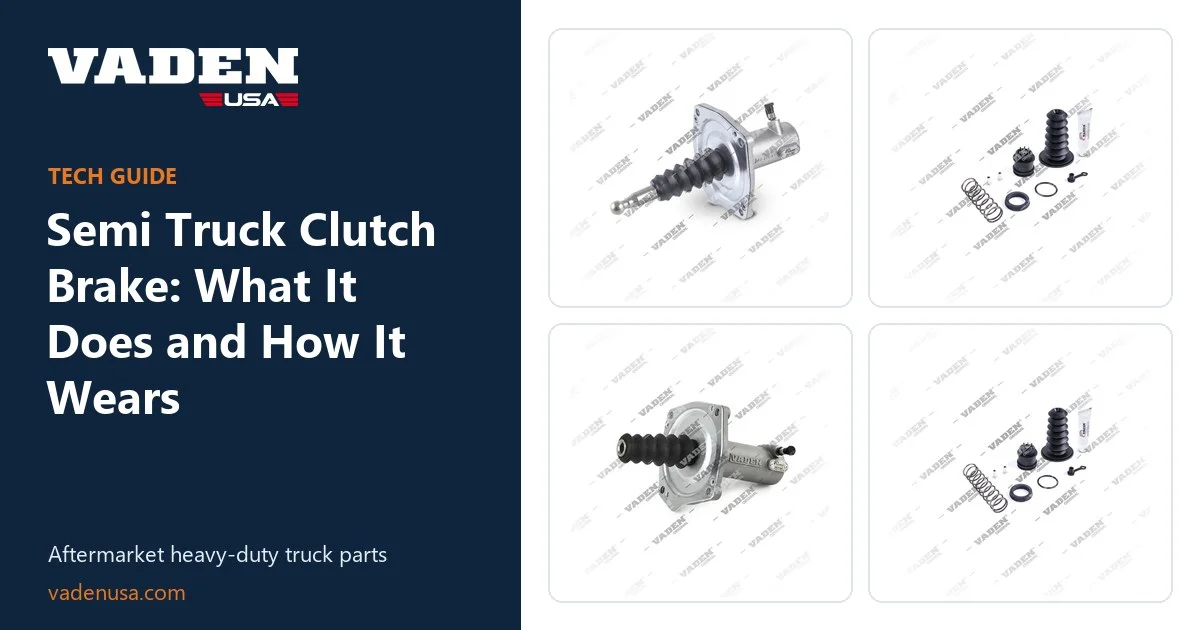
A clutch brake is a small friction disc on the input shaft of a heavy-duty manual transmission. When you press the clutch pedal fully to the floor, it slows the spinning input shaft so you can engage first or reverse from a standstill without gear clash. It is for stopped starts only, not for shifting while moving.
What a clutch brake does on a semi truck
With the engine running and the clutch released, the transmission input shaft spins with the engine. Press the pedal partway and the clutch disc separates from the flywheel, but the input shaft and the gears on it keep turning for a moment. From a stop, that spinning makes it hard to slide the shifter into first or reverse, and you hear grinding.
The clutch brake solves this. It sits on the input shaft between the clutch release bearing and the transmission front bearing cap. At the very end of pedal travel, the release bearing moves toward the transmission and squeezes the clutch brake, which quickly drags the shaft to a stop. The gear then goes in quietly. Think of it as the last inch of the pedal, reserved for starting from a stop. Eaton's Fuller driver instructions describe it the same way: applied by pushing the pedal fully down, and used only when the vehicle is standing still.
Trucks with synchronizers or automated shift systems, and most automatic transmissions, do not need the driver to manage this. A semi truck clutch brake matters on non-synchronized manual transmissions, where the driver does the shaft speed matching. If you are unsure what your truck has, check the transmission manufacturer's driver instructions.
When to use it and when not to
- Use it: when the truck is stopped and you select first, a low range or reverse from neutral.
- Do not use it: when shifting while rolling. Press the pedal only far enough to release the clutch, and match speeds or double clutch as your transmission requires.
- Avoid: pushing the pedal to the floor at speed. That presses the brake against a fast-spinning shaft, which overheats and wears it quickly and can damage or break the brake.
Transmission makers give this guidance in their driver instructions, for example the Eaton Fuller heavy-duty transmission driver instructions. For general rules on shifting and double clutching, see your state's commercial driver manual, such as the New York DMV CDL-10 driving safely section.
One-piece vs two-piece clutch brake
Clutch brakes come in two main designs. The choice affects how much work the job takes, not what the part does.
| Feature | One-piece | Two-piece (split) |
|---|---|---|
| Construction | Single solid ring slid over the input shaft | Two halves that clamp or lock around the shaft |
| Installation | Normally fitted when the transmission is separated from the clutch housing, such as during a clutch job | Designed to be fitted without separating the transmission, per the manufacturer's instructions |
| Best use | Planned clutch replacement, when everything is apart anyway | Roadside or shop replacement when only the clutch brake has failed |
| Trade-off | Simple design, but costly in labor if done alone | Faster, but needs correct assembly and a part that suits your clutch and transmission |
A 2 piece clutch brake is intended to save labor on a truck that is otherwise sound. During a full clutch replacement, many shops still fit a new one-piece unit because the transmission is already off. Whichever you choose, match it to the clutch and transmission series using the manufacturer's catalog, not by sight.
Clutch brake thickness and spacer
The clutch brake should squeeze only near the end of pedal travel, after the clutch has fully released. Brake thickness, any spacer or shim, and release bearing travel set that point, and the values vary by clutch and transmission model. A brake that squeezes too early or too late gives poor results, so changing one of these parts affects the others.
The clutch brake spacer is a shim or spacer used in some setups to set the brake position, following the manufacturer's specification. We do not give thickness or spacer dimensions here because they vary by model. Use the figures in the clutch or transmission maker's published service manual.
Symptoms of a worn clutch brake
A clutch brake wears from stopped starts and from misuse at speed. Common signs are listed below. Several overlap with clutch hydraulic and adjustment problems, so confirm before replacing parts.
| Symptom | Likely clutch brake cause | Also check |
|---|---|---|
| Grinding when selecting first or reverse from a stop | Brake worn thin or broken, so the shaft keeps spinning | Clutch not fully releasing, low hydraulic fluid |
| Hard to find first or reverse, truck creeps with the pedal down | Brake not slowing the shaft, or friction material gone | Clutch disc drag, pedal travel set wrong |
| Brake never seems to engage at the bottom of the pedal | Worn brake or incorrect thickness for the setup | Release bearing travel, clutch adjustment |
| Hard stop at the floor, clutch feels as if it drags | Brake too thick or squeezed too early | Adjustment, release bearing wear |
| Dust or friction debris in the clutch housing | Brake wearing out or breaking up | Clutch disc wear, contamination |
If the pedal is the problem, not the brake, look at the hydraulics first. Our guide on clutch servo problems covers soft pedals, slow release and fluid loss. For wider clutch wear, adjustment and pedal travel, read the semi truck clutch guide.
How to check clutch brake engagement
These steps are a general check. Always follow the exact procedure and limits in the transmission or clutch manufacturer's manual, because pedal travel and specifications differ.
- Park on level ground, set the parking brake and chock the wheels.
- Check clutch fluid level and the pedal for leaks or a spongy feel. A soft hydraulic pedal can fake a clutch brake problem.
- Start the engine with the transmission in neutral and let it idle.
- Press the pedal slowly and note where the clutch releases and where you feel the added resistance near the floor. That resistance is the clutch brake being squeezed.
- Press the pedal fully and try first or reverse. A healthy brake lets the gear enter quietly after a short pause.
- If it grinds, repeat once. Then release the pedal and shut off the engine. Do not keep forcing the gear.
- Compare what you found with the manufacturer's specification. Set pedal free travel first, then check clutch brake squeeze. If travel is off, correct it before judging the brake.
- If the brake does not slow the shaft, or the symptoms continue after adjustment, plan an inspection of the brake itself through the clutch housing, following the manufacturer's procedure.
Fleet managers can reduce early wear by training drivers to use the brake only from a standstill. A clutch brake that sees daily abuse at speed may last only a fraction of its normal life. Add the check to your regular service routine, as in our semi truck preventive maintenance checklist.
Related VADEN clutch parts
VADEN does not list clutch brakes. We make and supply the hydraulic side of the clutch system, which often decides how the pedal feels. Browse the clutch category, master cylinders, clutch servos and hydraulic clutch pedal units. If the clutch housing is open, also look at the flywheel housing guide. VADEN parts are aftermarket replacements. Brand names such as Eaton are trademarks of their owners and are used for identification only.
FAQ
What is a clutch brake on a semi truck?
It is a friction disc on the transmission input shaft that slows the shaft when the clutch pedal is pressed all the way down. It lets the driver engage first or reverse from a stop without gear clash.
Do you use the clutch brake when shifting while driving?
No. Use it only when the truck is stopped. When shifting on the move, press the pedal only far enough to release the clutch. Bottoming the pedal at speed wears the clutch brake and can break it.
What is the difference between a one-piece and a two-piece clutch brake?
A one-piece unit slides over the shaft and is normally fitted when the transmission is apart. A two-piece, or split, unit clamps around the shaft and is designed to be fitted without separating the transmission, per the manufacturer's instructions.
How thick should a clutch brake be?
It depends on the clutch and transmission. Thickness, any spacer and release bearing travel together set where the brake squeezes near the end of pedal travel. Use the manufacturer's specification for your model, not a general figure.
What does a clutch brake spacer do?
A spacer or shim is used in some setups to set the clutch brake position as the manufacturer specifies. Whether one is needed depends on the clutch and transmission.
What happens when a clutch brake goes bad?
You may hear grinding when selecting first or reverse from a stop, struggle to find the gear, or feel the truck creep with the pedal pressed. Check the clutch hydraulics and adjustment as well, since they cause similar signs.
Need clutch hydraulic parts or help matching an OE number? Request a quote or email info@vadenusa.com and our team will help.
Blog
3 2026-11-19
Air Brake Troubleshooting Guide: Symptoms, Causes, Fixes
Symptom-by-symptom air brake troubleshooting for semi trucks: slow build-up, pressure loss, constant dryer purge, locked brakes and ABS faults, with first checks.
 2026-11-19
Trailer ABS Light: Causes, Reset and DOT Violation Rules
Why the ABS light stays on a semi trailer, what the power-up check should look like, common causes, blink codes, resetting and what DOT rules say.
 2026-11-19
WABCO Air Compressor: ID, Rebuild Kits and Replacement
How to identify a WABCO air brake compressor by its 10-digit number, tell single from twin cylinder, and decide between a repair kit and a replacement unit.